
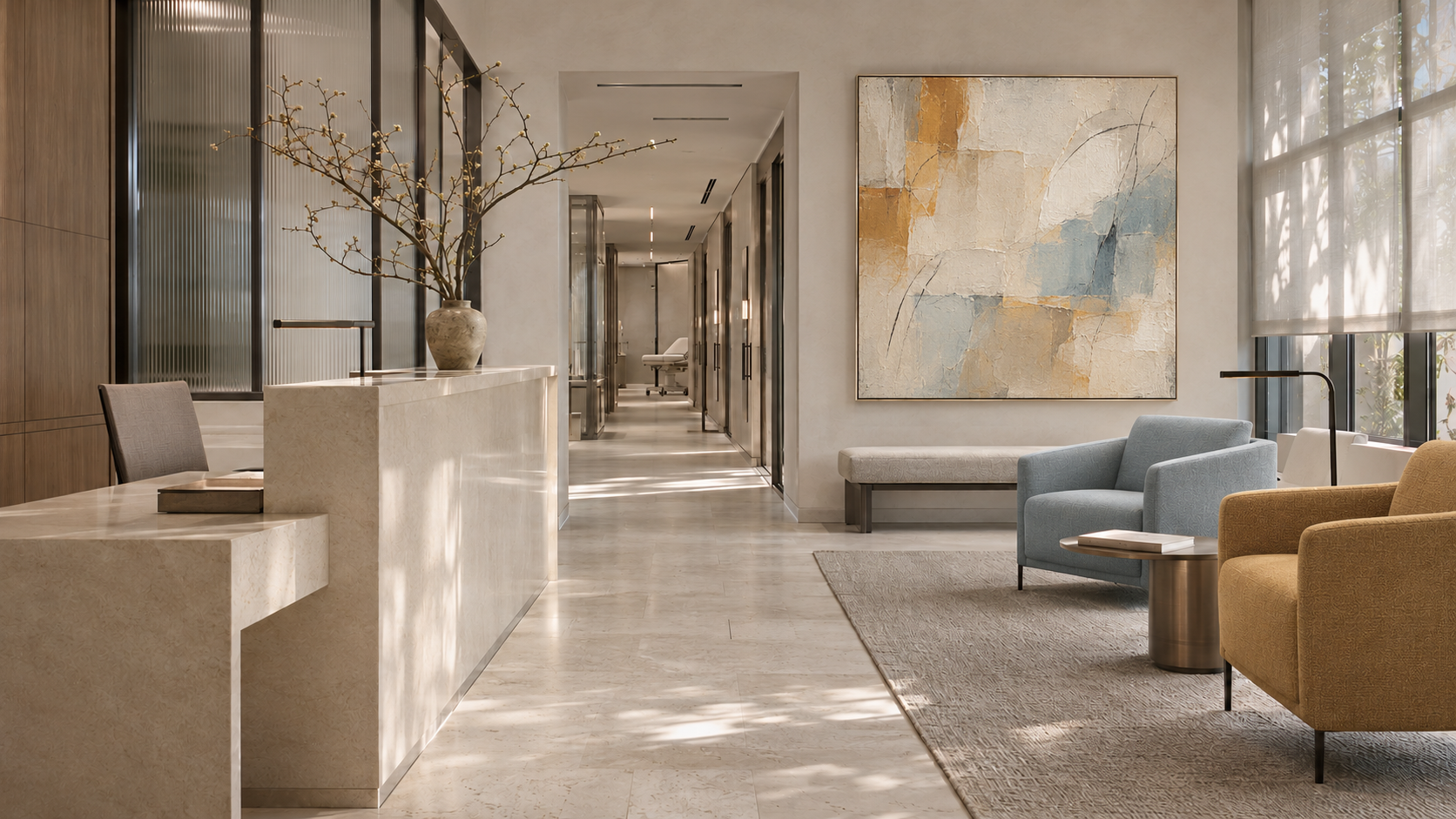
The Human Need
What should people experience here?
People arrive at healthcare spaces in different emotional states. Some feel anxious or uncertain, others are seeking reassurance, relief or simply a routine appointment. Yet they often enter environments designed primarily around clinical efficiency, with little consideration for how those spaces make them feel.
We begin by looking at the experience from both sides: the people receiving care and those providing it. What does someone need when they first walk through the door? How can waiting feel less stressful? Where is privacy important, and where might a sense of openness or connection be welcome?
The intention is to create a healthcare environment where people feel comfortable, respected and cared for, while allowing medical professionals to work with ease and efficiency.
The Design Response
How did the spatial design respond to that need?
The design considers the entire patient journey, from arrival and reception to waiting, consultation and departure.
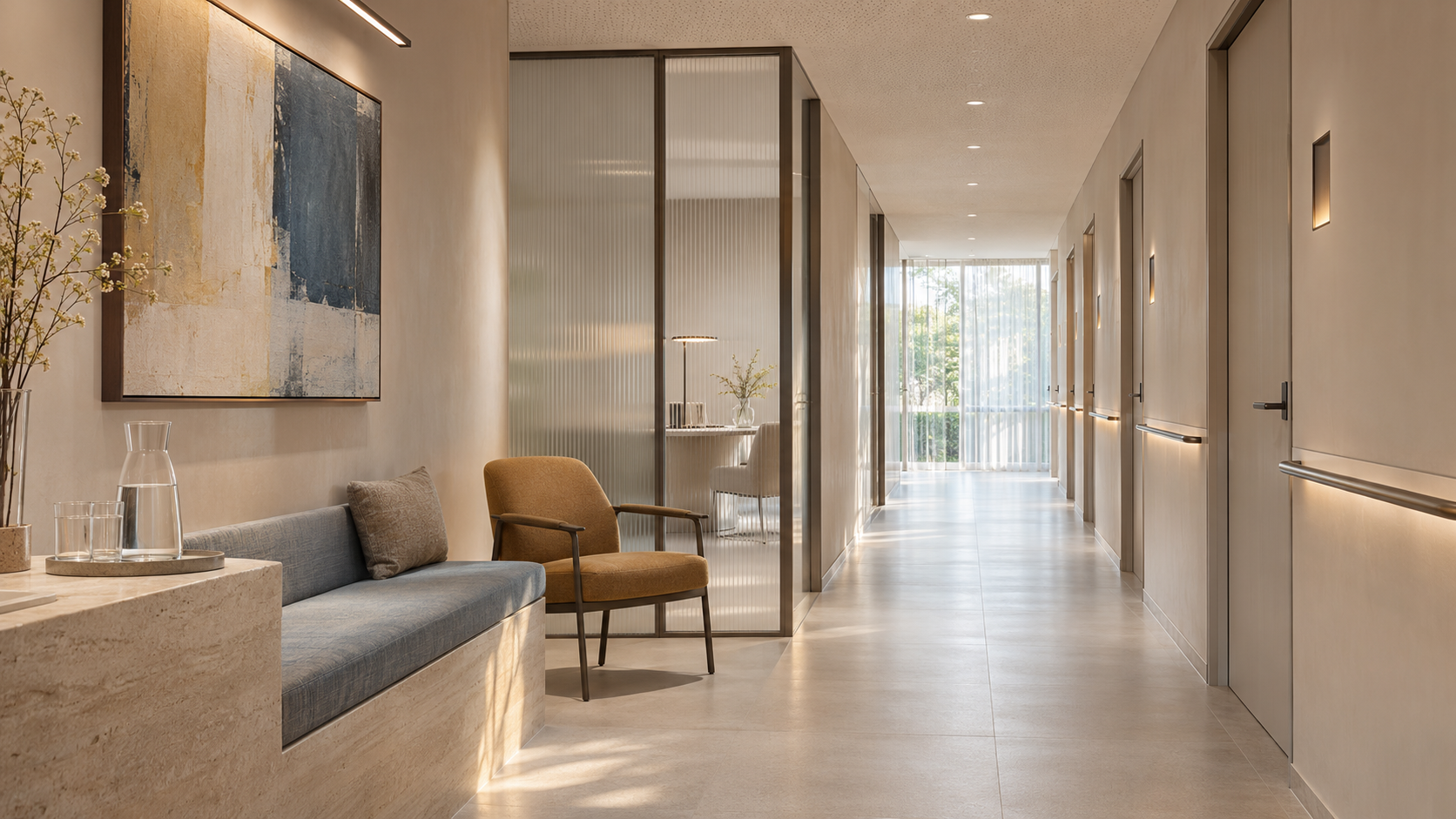
Clear circulation and intuitive wayfinding reduce uncertainty, allowing visitors to understand where to go without constantly needing direction. Reception and waiting areas are approached as welcoming environments rather than purely functional spaces, introducing opportunities for comfort, privacy and moments of calm.
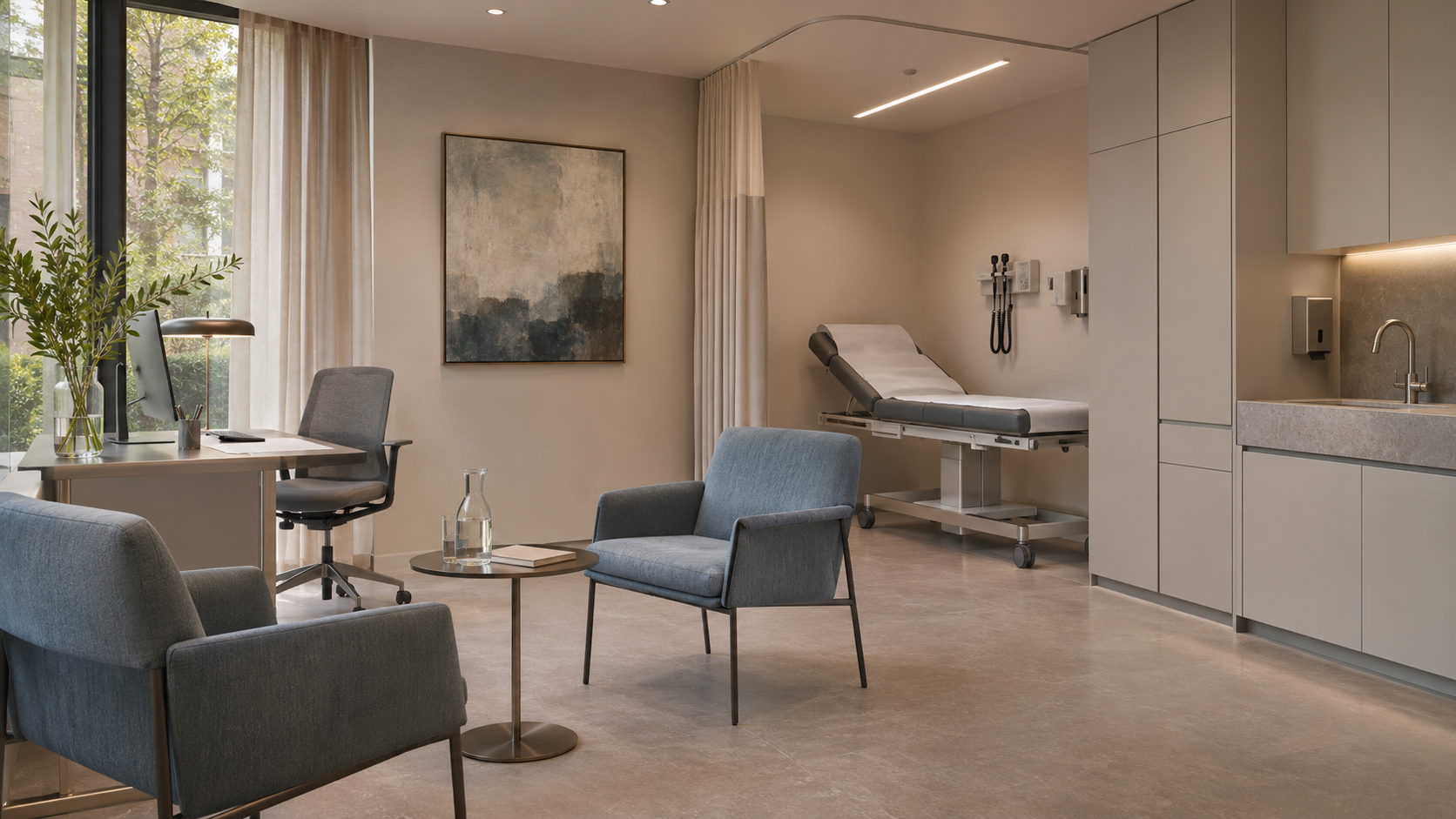
Consultation rooms balance clinical requirements with a more personal atmosphere, while the organisation of staff and treatment areas supports efficient daily operations.
Throughout the space, transitions between public and private areas are carefully considered, helping people move through their visit with a greater sense of ease and dignity.
The Details
Light, materiality, acoustics and furniture all contribute to the experience of care.
Soft, balanced lighting creates a comfortable atmosphere while supporting the practical requirements of a clinical environment. Warm, tactile finishes introduce a sense of familiarity, balanced with durable, hygienic materials appropriate for healthcare settings.
Acoustic considerations help protect privacy and reduce unnecessary noise, while carefully selected seating and furniture offer comfort without compromising accessibility or functionality.
Thoughtful details, from the placement of a chair to the quality of light in a waiting area, can make an unfamiliar environment feel more approachable.
The aim is not to disguise the clinical nature of the space, but to bring greater humanity into the experience.
The Space
A healthcare environment designed around the people who experience it, where clinical functionality and human comfort come together, and care begins long before the consultation.
Begin
Tell us about your project
Share the space, the people who will use it, and what you would like it to make them feel. We will take it from there.
Tell Us About Your Project →